Red, White and Blue – Multimedia Project

Image Source: Brett Sayles

Click here to explore our multimedia project: Red, White and Blue.

Racism is a systemic issue and permeates every aspect of life – including and especially health. Systemic oppression causes inequalities in housing, criminal justice, and so many other factors that worsen and shorten the lives of black and African American people while many who are privileged remain unaware of these very real damages.

This multimedia project by myself, Marcela Sifuentes, Sergio Montanez and Taylor Brown explores these inequities, what causes them, and what steps we can take to start making change – as well as how Black Lives Matter can play a huge part in that.

Final Reflection – JRN 4100

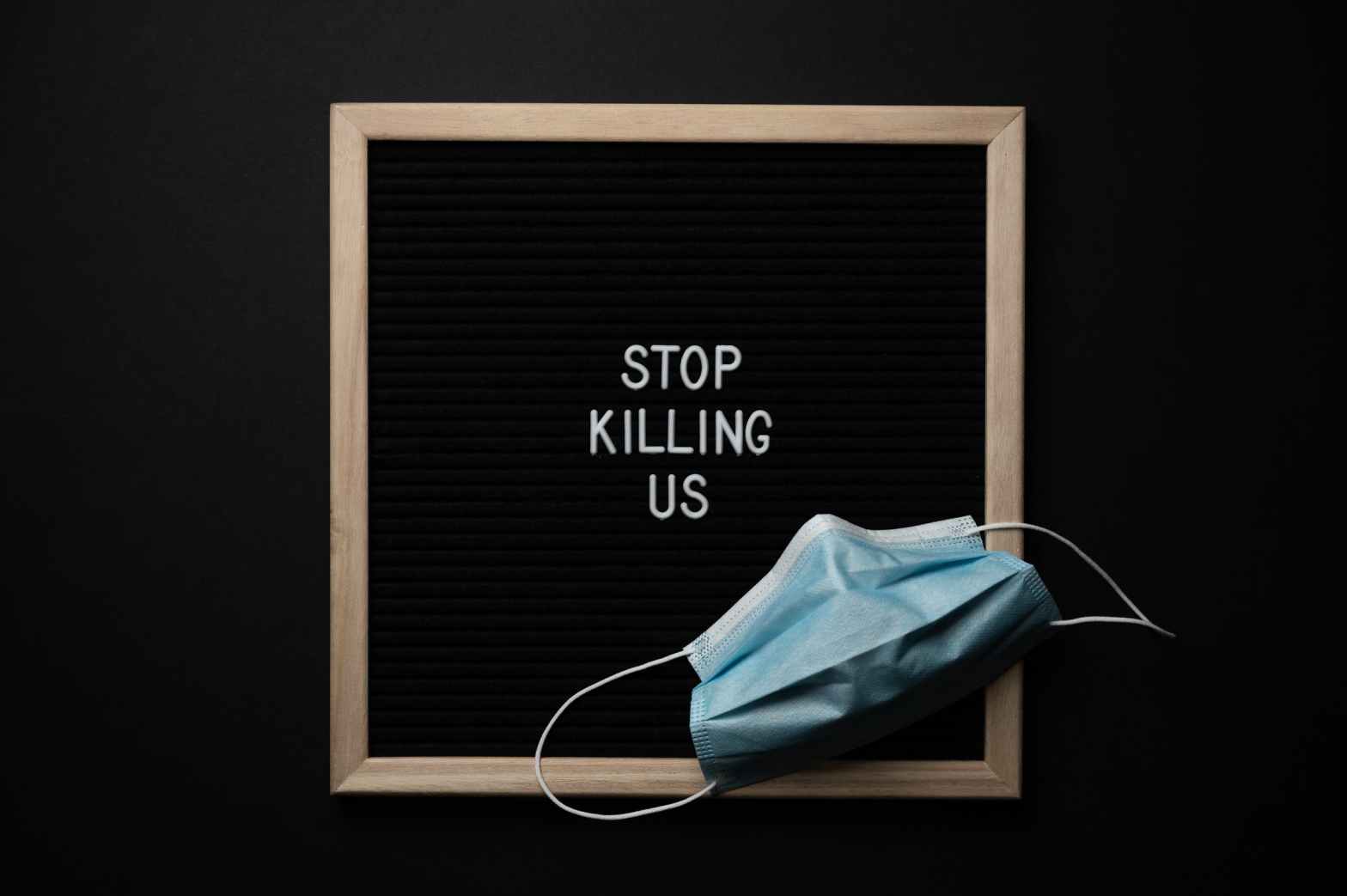
Image source: cottonbro

I was not sure what to expect when I signed up to take a multimedia journalism class completely online during a pandemic. I had no new equipment to work with beyond what technology I already owned, so I was very skeptical that I could learn something new and valuable to my work while sitting at home on my computer.

In some ways, I’ll admit I was right. Working two jobs and doing school full time as well meant I rarely had time to really get into the lessons of this class at the depth that I wanted to. I already knew how to do some of things we went over in this class – at a basic level, at least – and I think that kind of hurt my enthusiasm to learn new things as well.

With no time and no new equipment, I started this course doubtful and without much enthusiasm. That attitude followed me throughout, just due to exhaustion, but there were little lightbulb moments throughout that made me forget I was taking a class that was sucking up time from my busy schedule and made me feel instead like I was excited to learn something.

I love photography – I’ve never been good at it. I’d always meant to get around to learning the rule of thirds, but never really did until I had to for this class. I find myself now shooting genuinely better photos, not just for my school projects, but for personal use as well. Knowing how to align your shot and frame it just right really makes a difference in the quality of the image, and I really do owe this course for helping me unlearn some of the unprofessional photo taking methods I’d clung to before.

I also learned a little bit about audio in this class when we studied podcasting. I already knew how to edit sound on a basic level from past classes, but this class forced me out of my comfort zone a little and inspired me to experiment outside my projects. I ended up watching Audacity tutorials even after I’d recorded and edited my podcast for class to learn how to edit, trim and mix sound together purely because I’d become so interested in it. A friend and I considered starting a podcast ourselves – though we ended up being too busy to really get into working out an idea for it.

I got to do a lot of things in this class, some that I was comfortable with and some that I wasn’t. I wish I’d had the chance to learn more about video and had a chance to actually shoot some footage, but the week that we studied it I was too busy to even bother attempting the lab. Beyond that, I will say that the things this class forced me to try even though I didn’t fully understand were the things I enjoyed the most. I already know how to write articles with data – I didn’t know how to record and edit a podcast properly. I enjoyed the podcasting a little more.

In the end, I’d say that despite my limited time and generally unenthusiastic approach to all my classes this semester due to work and the pandemic, I learned some useful skills. My one regret is that I couldn’t take this class during a time when we weren’t all stuck at home – I would have loved to get some hands on experience with a nicer camera for my labs. Besides that though, I would say it was a very valuable experience overall, and I think a necessity for anyone that thinks they’re a journalist.

Modern journalists need to know how to do everything these days, and I think this course was a good first step in every direction as far as learning those skills.

Lab 7 – Health and Education in Numbers

Image Source: Startup Stock Photos

Health and Education

According to AAFP.org, “adults who don’t finish high school can expect to live nine years less than their college-educated peers – and that gap is widening.”

The link between education and health is an interesting one, though hardly perplexing. As AAFP puts it, “education typically leads to better jobs, more money and many other benefits, including better health insurance, which leads to better access to quality health care. Higher earnings also allow workers to afford homes in safer neighborhoods as well as healthier diets.”

Local Numbers

I live in Shiawassee County, a rural mid-Michigan county with a current population of around 68,000, according to the U.S. Census. 90.5% of our population 25 years and older has an education level of ‘high school graduate or higher,’ which is good to hear. 17.2% say they also have a Bachelor’s Degree or higher – which would be about 11,000-12,000 people.

I decided to look at Oakland County as well, to see if we country folk were any less educated than the people of Metro Detroit. Turns out, we are. The percentage of people 25 and older in Oakland County with their Bachelor’s Degree or higher was 46.4%, which is more than double Shiawassee County’s numbers.

Besides the educational disparity, Oakland County and Shiawassee had some other interesting and notable differences. Households with a computer were around 6% higher in Oakland than Shiawassee, which could be attributed to Shiawassee being more rural, though I think household income has a little to do with it, too.

The median household income in Oakland County as of 2018 was $76,387, while Shiawassee’s was $54,724. This is reflected in the poverty rate as well, which sits at 10.8% for Shiawassee and 8.2% for Oakland.

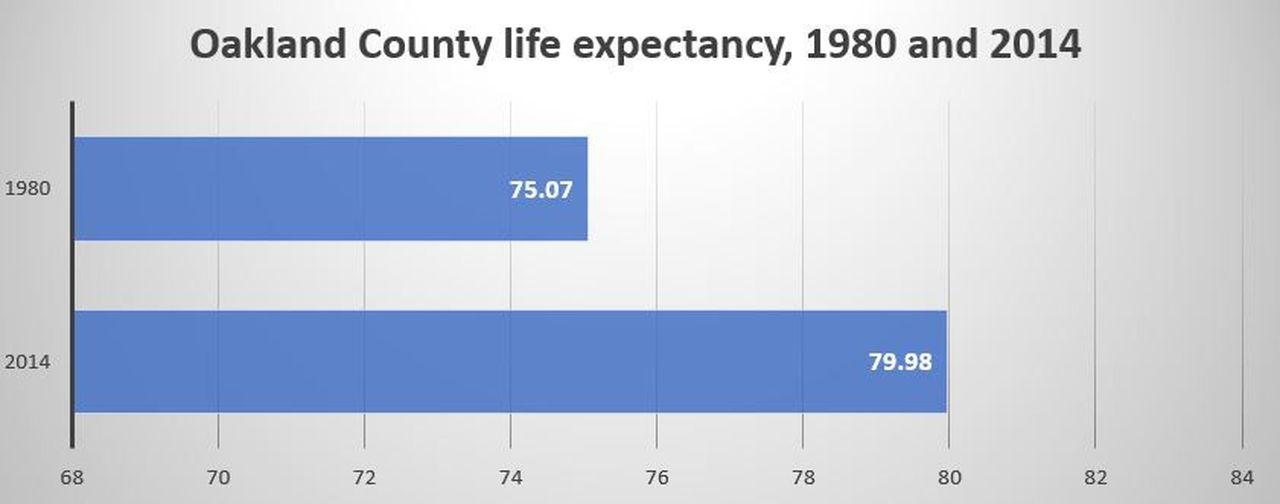
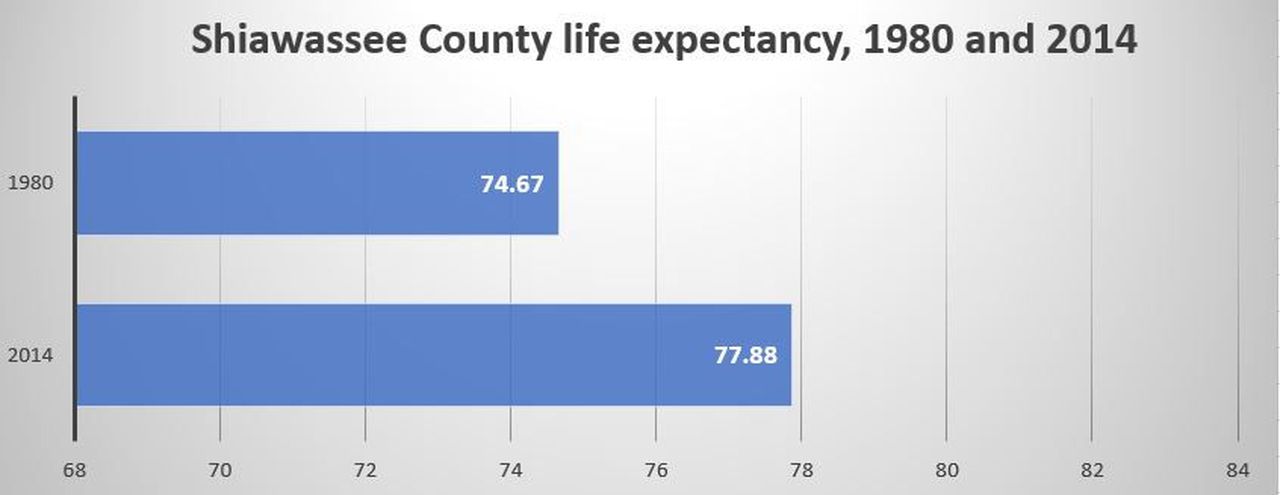
The life expectancies of Oakland and Shiawassee County, comparing 1980 to 2014. The data shown represents the life expectancy for both genders, which most recently was 79.98 in Oakland County and 77.8 in Shiawassee. Source: MLive

As a final comparison, I also looked at life expectancy to test the theory that educated people tend to live longer than those less educated. The life expectancy in Oakland County was 82 for women and 77.8 for men, as of 2014. In Shiawassee, it was 80.2 for women and 75.5 for men. As I had expected to find, life expectancy for both men and women is around two years less in my county.

Connecting the Dots

So, is there a connection between education and health here? I would say yes. The populations are admittedly a little difficult to compare because Shiawassee is considerably more rural and Oakland County’s population is about 18 times the size of Shiawassee’s. There are certainly other factors contributing to the lower income and health of people in mid-Michigan as well – but looking solely at education, I would venture to say it is a factor.

According to the National Bureau of Economic Research, “those with more years of schooling are less likely to smoke, to drink heavily, to be overweight or obese, or to use illegal drugs. Interestingly, the better educated report having tried illegal drugs more frequently, but they gave them up more readily.”

‘With less education comes less money and poorer health’ seems to be a hypothesis that rings true when looking at my rural county. This lack of education is not confined to mid-Michigan, either – rural areas across the country are known to be less educated.

This excerpt from a piece in The Atlantic by Jon Marcus and Matt Krupnick illustrates a potential reason why:

“When they’re ready to be done with high school, they think, ‘That’s all the school I need, and I’m just going to go and find a job’” on the family farm or at the egg-packaging plant or the factory that makes pulleys and conveyor belts, or driving trucks that haul grain.

From a personal perspective, I think this is absolutely true. I grew up on and around farms and I think the idea that staying local and working at the family business is a very common plan where I’m from. The lack of education that this brings with it creates a cycle of staying away from higher education almost purposefully, I think, because anti-intellectualism seems to breed in these rural areas as well. There’s another interesting piece in the Atlantic about that and how it has affected our politics in the U.S. – but that’s a story for another time.

For now, the point is this: less education in rural areas, even in Michigan, is a real thing and is right there in the Census data. This does also seem to negatively affect the health and life expectancy of people living in rural areas.

Can we improve household income and the health of people living in those areas when they either don’t have access to or turn away the opportunity for higher education? It’s a question with no good answers yet, but one that deserves looking into.

If you’d like to check out the county statistics and comparisons for yourself, click here.

A Year Alone

The COVID-19 pandemic has brought with it significant changes to nearly every aspect of life in 2020. The phrase, ‘in these unprecedented times’ seems to be part of a new, incredibly bizarre norm.

Quarantine, masks, and a stomach-churning, always present fear of a virus we can’t seem to understand are now part of daily life. Sydney Thaler is learning to roll with it.

Sydney shows off a new mask after work on Monday, Nov. 2 2020. She wears a mask all day during her shifts as a beauty advisor at Ulta Beauty.

As senior at Oakland University studying International Relations, Sydney found her life, like many others, tipped upside down in March of 2020.

“At the beginning of all this, I thought, like, this is great! A break from life,” Sydney said. “But after a few weeks I realized it really wasn’t. I got really depressed and started binge eating.”

While quarantining is much safer than going out and potentially becoming infected with COVID-19, it has its drawbacks, especially on mental health. The CDC even has a page dedicated to coping with these difficult times.
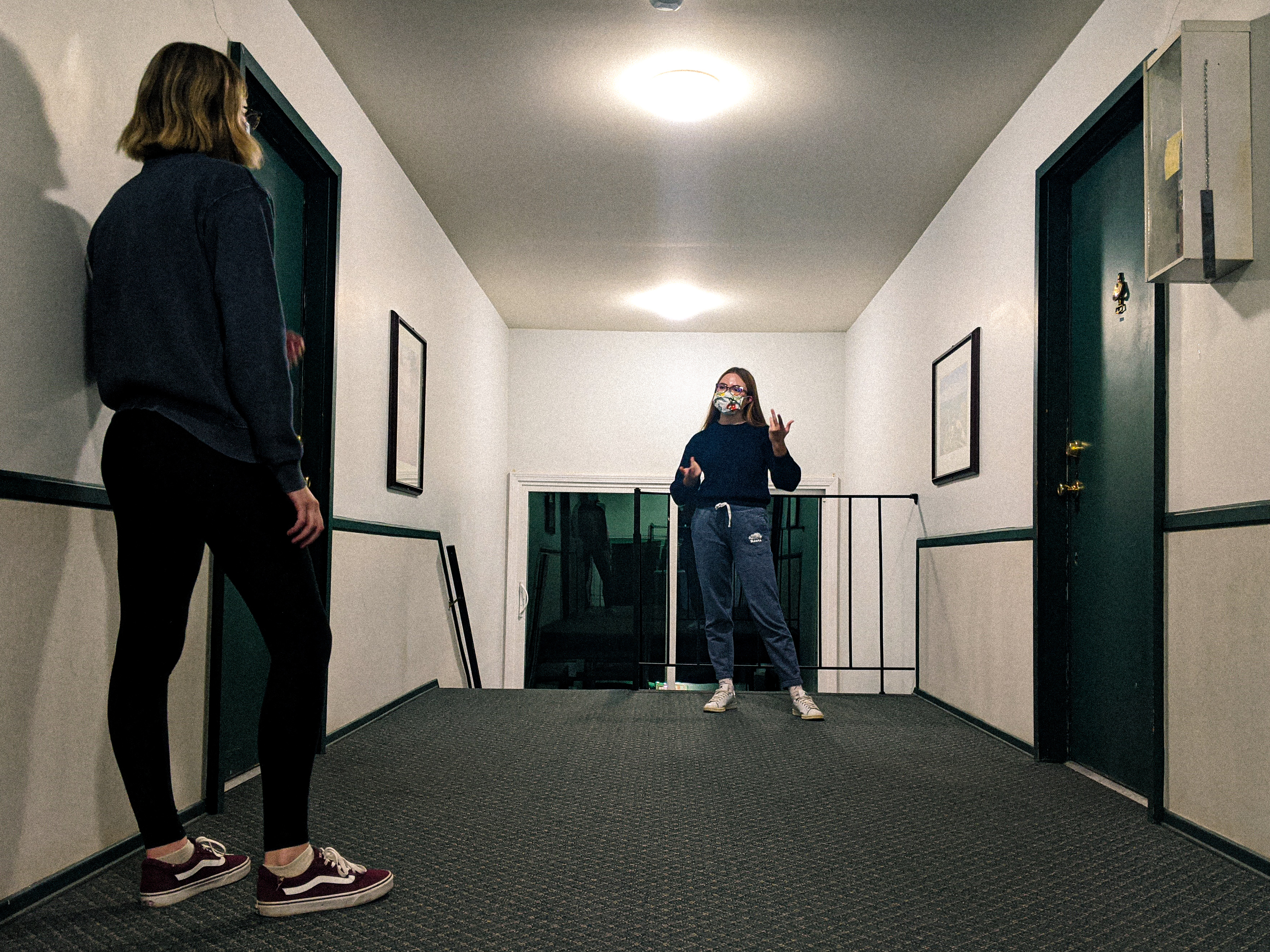
Sydney and Sidney have a socially distanced catch up outside an apartment door, Nov. 2 2020. The CDC recommends everyone stay at least 6 feet apart from others during this time.

Social distancing, while doing wonders to keep us safe, has had a detrimental effect on the mental health of many. Humans are social creatures, and a lack of closeness and the ability to see our friends has taken its toll. Not being able to see other people in general, especially at the beginning of this year, has been difficult, Sydney said.

“I had to start seeing my therapist online rather than in person,” she said. “It was still good to talk to her, but my whole family was in the house with me now. It was kind of hard to be truthful with her – I didn’t want them to overhear me.”
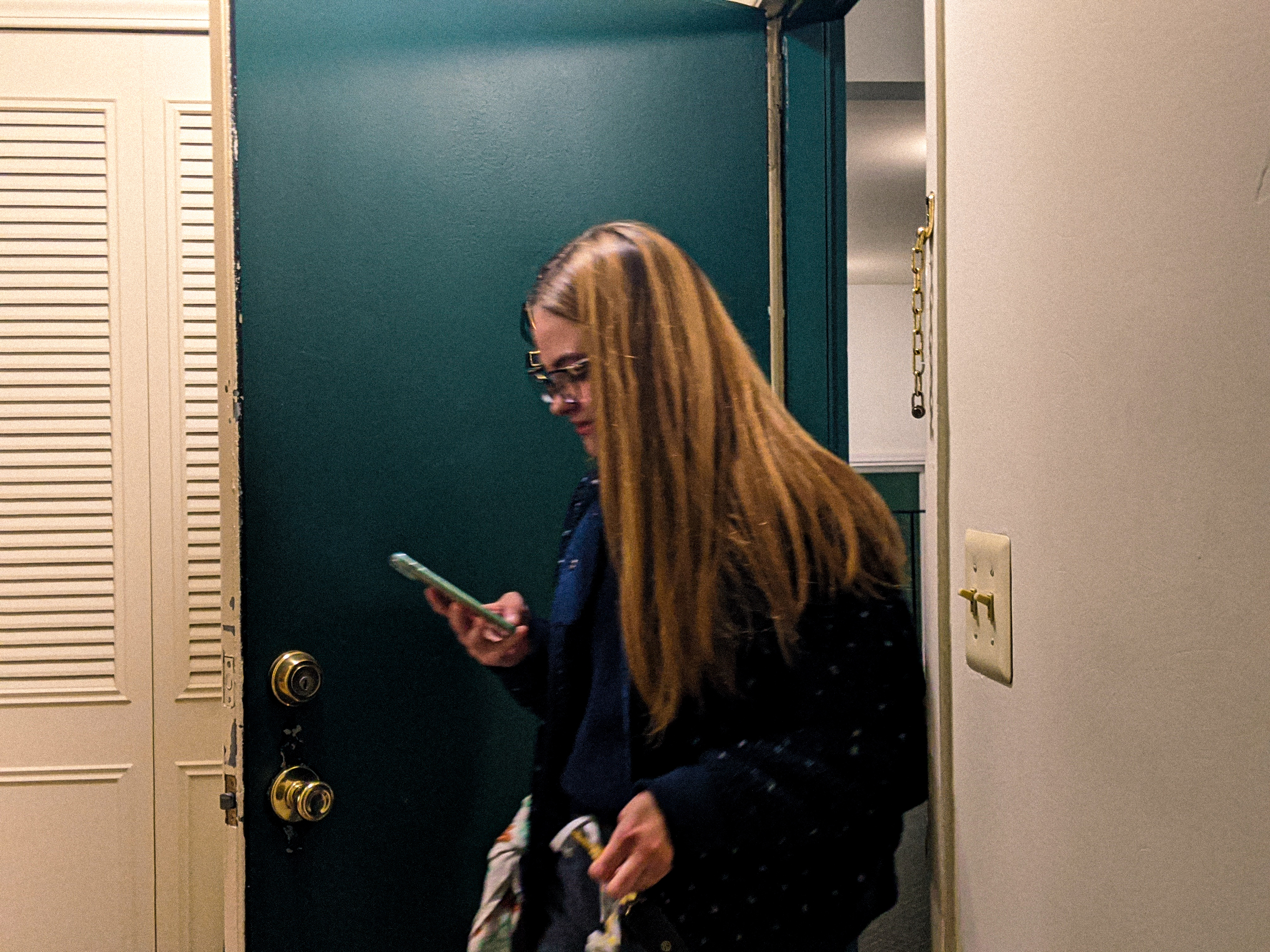
Sydney returns home from a shift at her job, Nov 2 2020. Like many, she lost her job in the early months of quarantine, and only recently returned to working in person.

Sydney says being back home with family was a strange adjustment. She’d been living in the dorms at college and working at Ulta, then suddenly she was back living with her family and furloughed by her job.

“I mean, I was happy to be still making money at home, I was on unemployment,” Sydney said. “It was insane though, I was making more doing nothing than I ever did at work.”

“I was getting kind of bored too, though. It’s boring sitting home, alone in your house, week after week.”
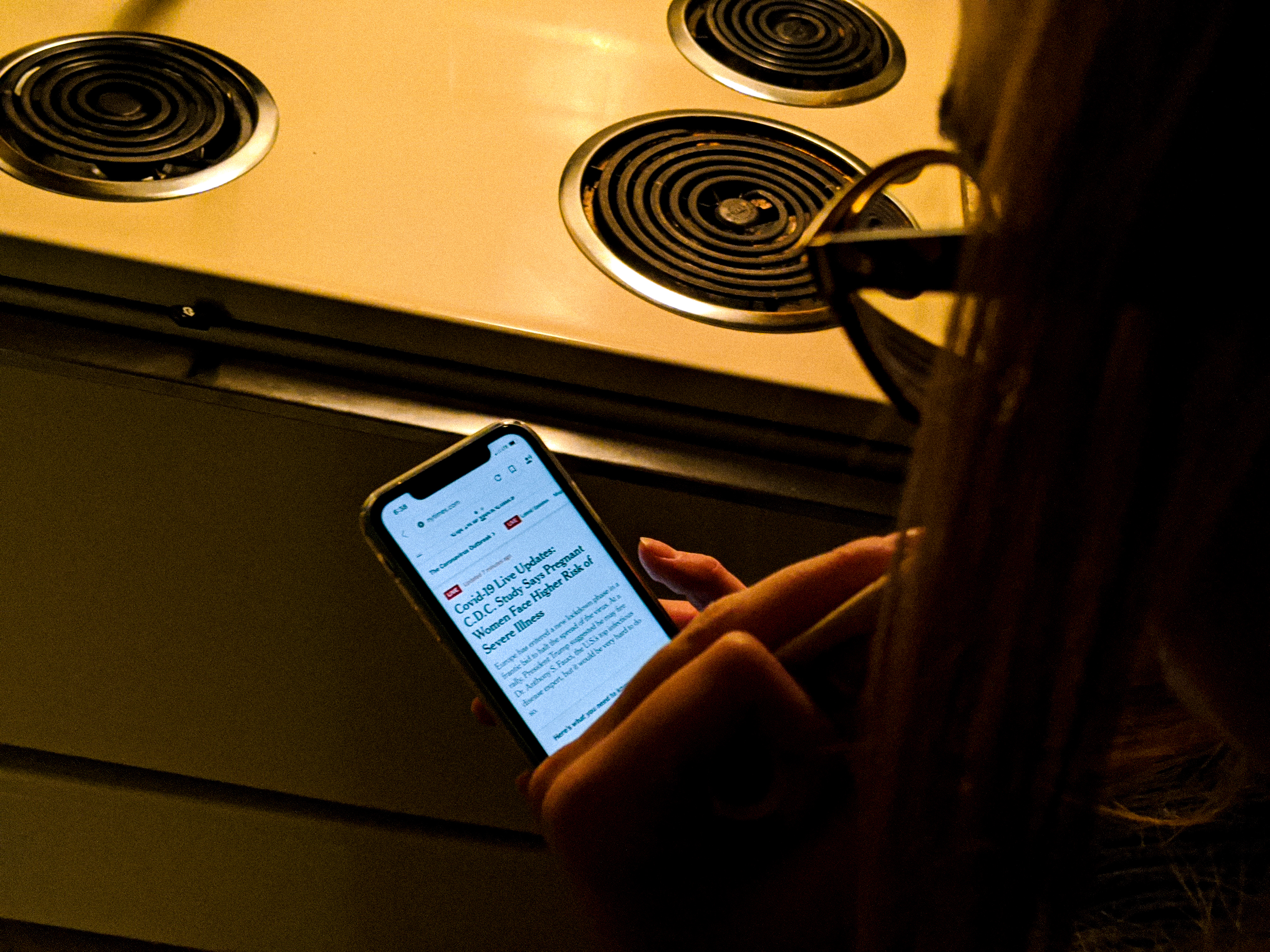
Sydney checks the New York Times live COVID-19 updates page in the kitchen, Nov 2 2020. Like many, she feels stressed by the constant barrage of upsetting news with no clear resolution in sight.

“My manager called me at the end of July and I came back to work. I’ve heard that some people are still on furlough,” Sydney said. She has mixed feelings about being back to work in a retail environment.

“I’m very scared that I’m going to get COVID,” she said. “The other day this guy came in to return his wife’s perfume and had no mask on… It scares me now when people get close to me in public.”
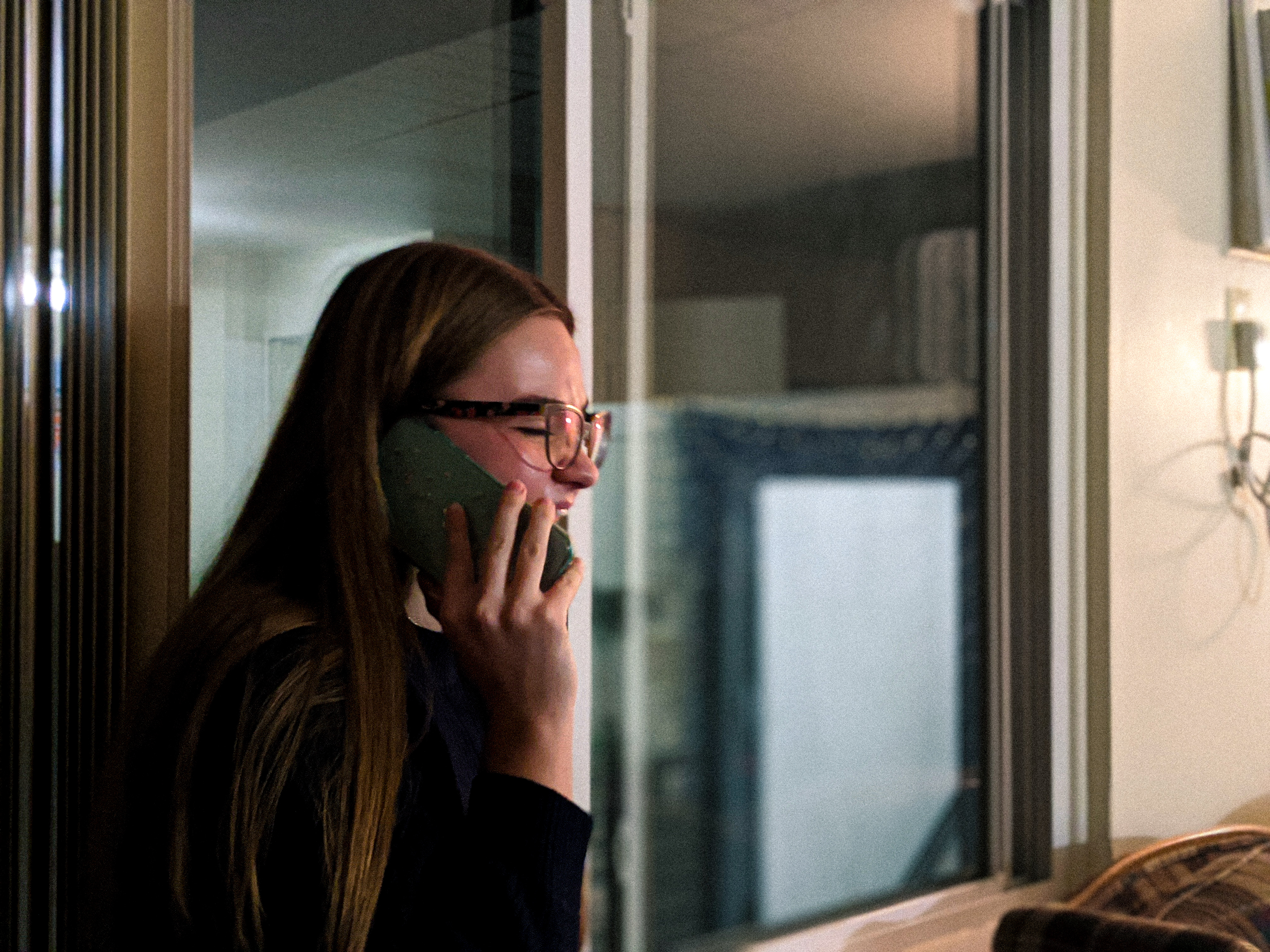
Sydney answers a call from a friend after her shift, Nov 2 2020. Despite some rules around social gatherings being lifted, remote contact remains one of the main ways many people are connecting.

With going out in public being such a risk, Sydney says she misses the way life used to be just a year ago and wishes she’d known how good things were. “I really miss living on campus,” she said. “I love my family, but living at home, I feel like I’m not as independent as I was before.”

“I feel like, not only do I live at home, but I also have to rely so much on other people. You know, I have to rely on them to wear a mask when I’m at work, things like that. It’s scary. I miss being able to not worry if the person next to me was going to kill me by just breathing,” Sydney said.
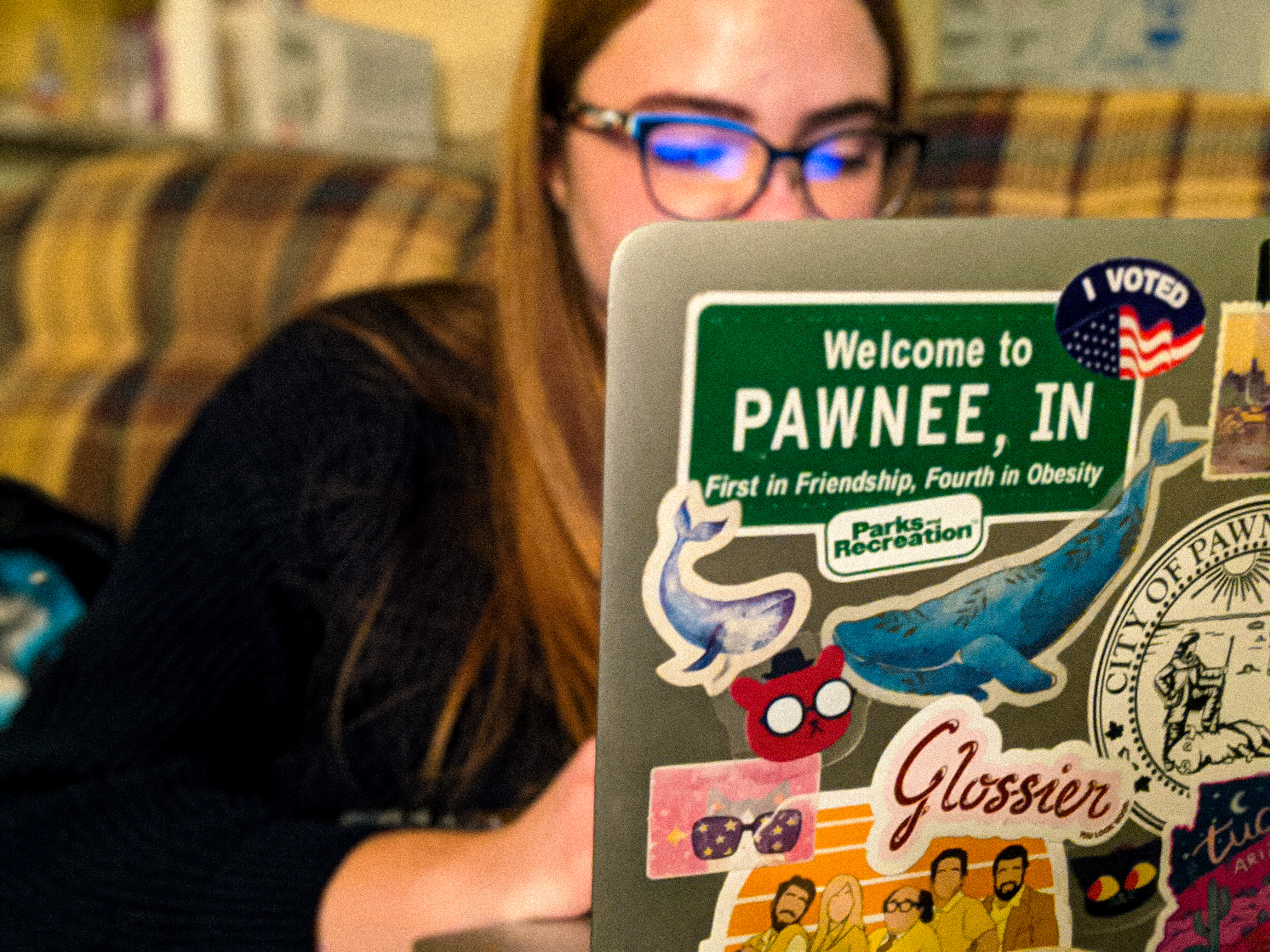
Sydney types on a laptop, Nov 2 2020. Many, if not most, college classes in the state of Michigan are now remote and completed entirely online.

Quarantine hasn’t been entirely gloom and doom for her, though. Despite the constant fear and finding it hard to get motivated and take on much at the beginning of the era of COVID-19 social isolation, Sydney says now she’s started to make choices for the better of her physical and mental health.

“I started working out, just doing Chloe Ting workouts that I found on YouTube,” she said with a laugh. “I also have found that I use hand sanitizer and stuff a lot more. I always used to use hand sanitizer when I went out in public, but now I find myself using it even more often.”

“For two weeks I even did yoga every day. I’ve been trying to do stuff that’s better for me.”
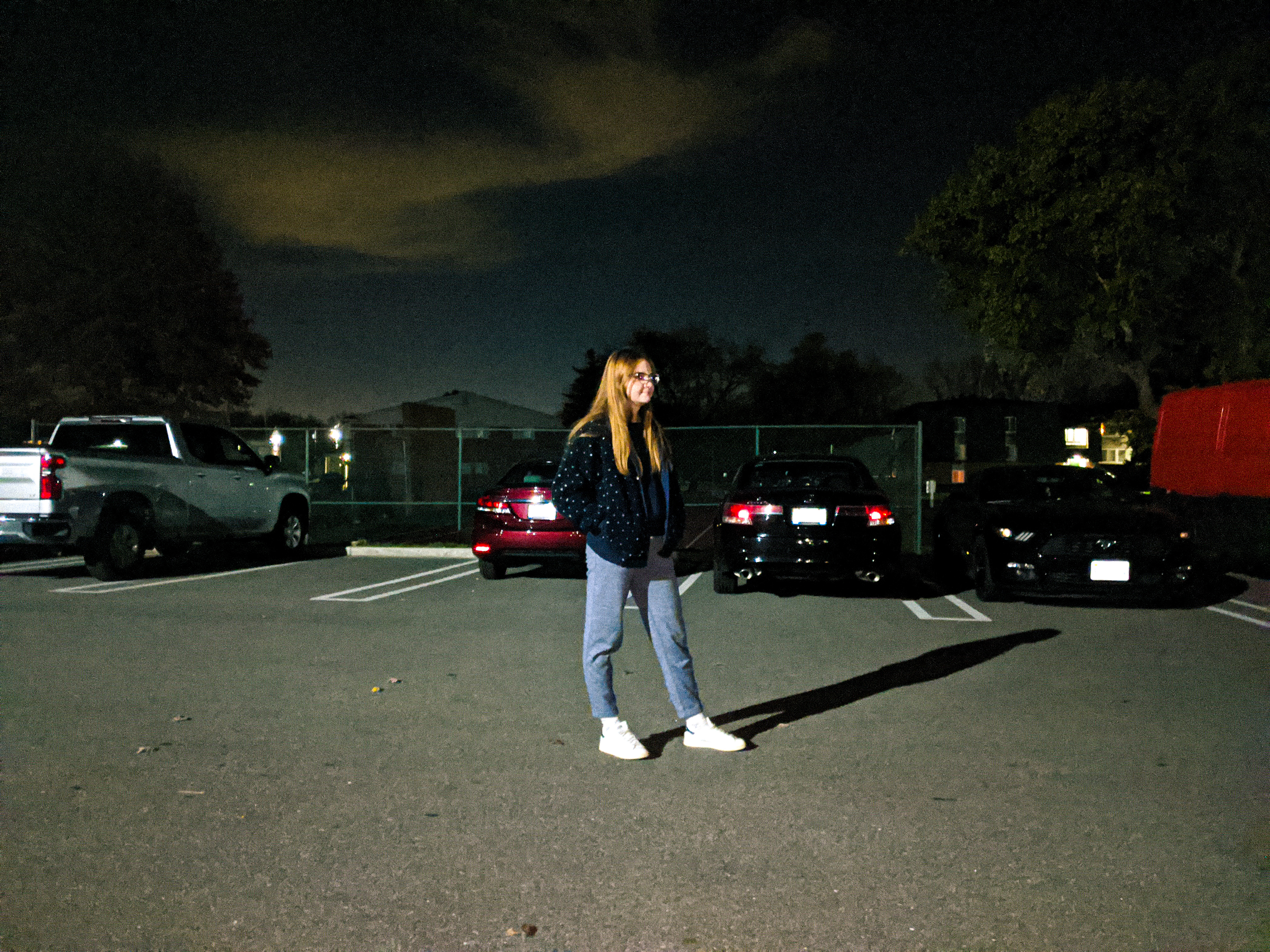
Sydney poses in a lot near Oakland University, Nov 2 2020. Despite living a considerable distance from campus, she still visits nearby to see friends that live close to the school.

Despite the fear of getting sick and the challenges of online class, working and coping with mental health on top of it all, Sydney is doing alright. She is confident that she’ll get by alright, though she worries for the fate of the country as we continue to see rising COVID-19 cases.

“Things are different now, and you know, I think as Americans we are a very individualist society, not a collectivist one,” she said. “People, I think, only really care about the virus if it directly affects them, but that isn’t fair to everyone else. These people who don’t care because they don’t have it could be asymptomatic, out there spreading it without realizing.”

She says the best thing we can do is take care of ourselves and be mindful of others while in public. While Sydney doesn’t see this ending any time soon, she is hopeful that we will all find a better way to deal with this strange new normal and work toward making everything safer for everyone.

Lab 4 – Life with ADHD

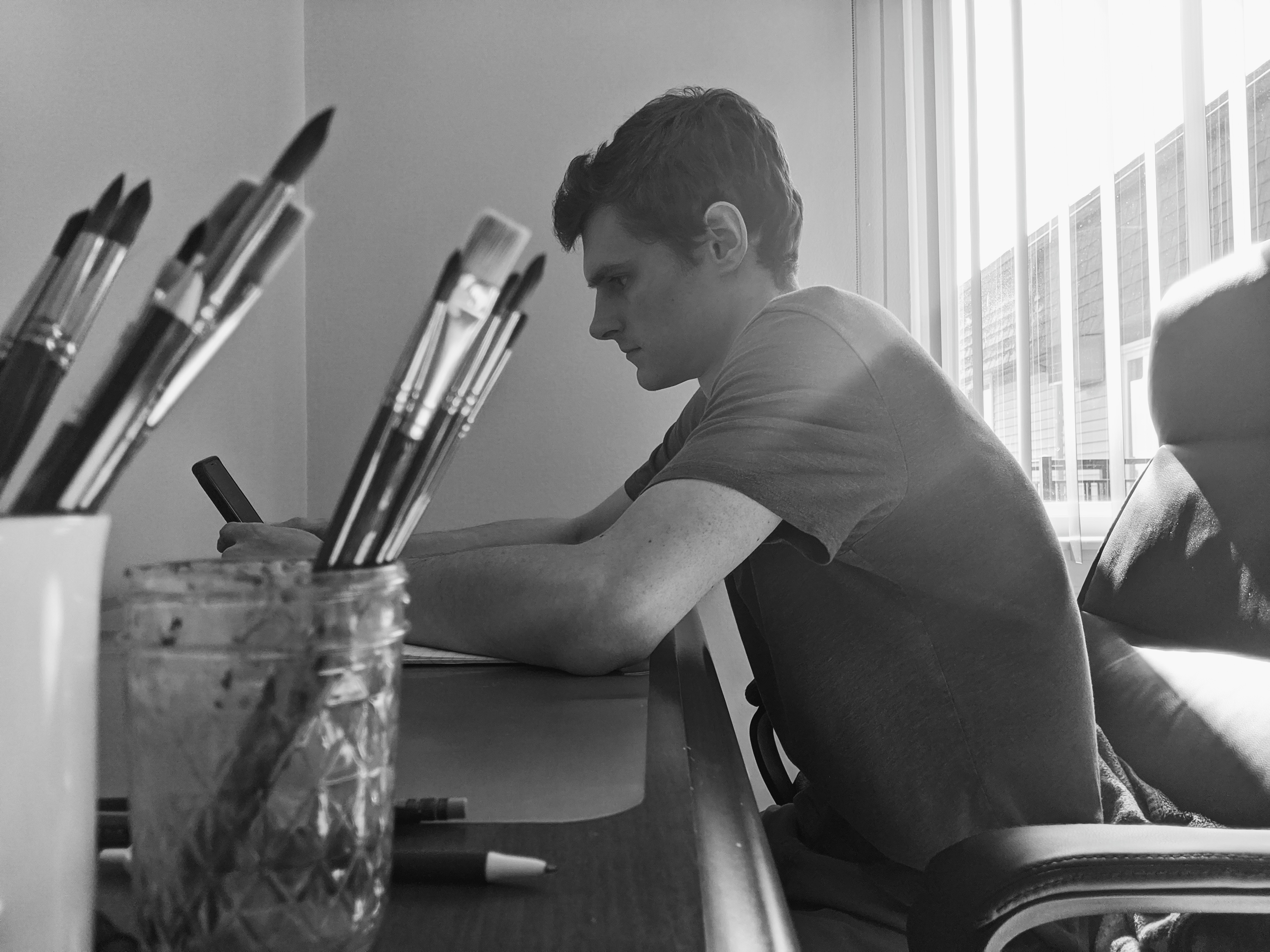
Nathan, outside his apartment on Monday, October 12. He is returning from a morning of working as a TA on campus.

Nathan is an Oakland University student studying chemistry. He has taken medication for ADHD, or Attention Deficit Hyperactivity Disorder, since he was 5 years old.

Nathan walking to his car to commute to Oakland University, where he works in a chemistry lab. He is currently working on applying to grad school.

He is 21 years old now, and a senior in college. ADHD is just a fact of life for him, he says. “It’s my entire life. It’s the way my brain works, it’s who I am.”

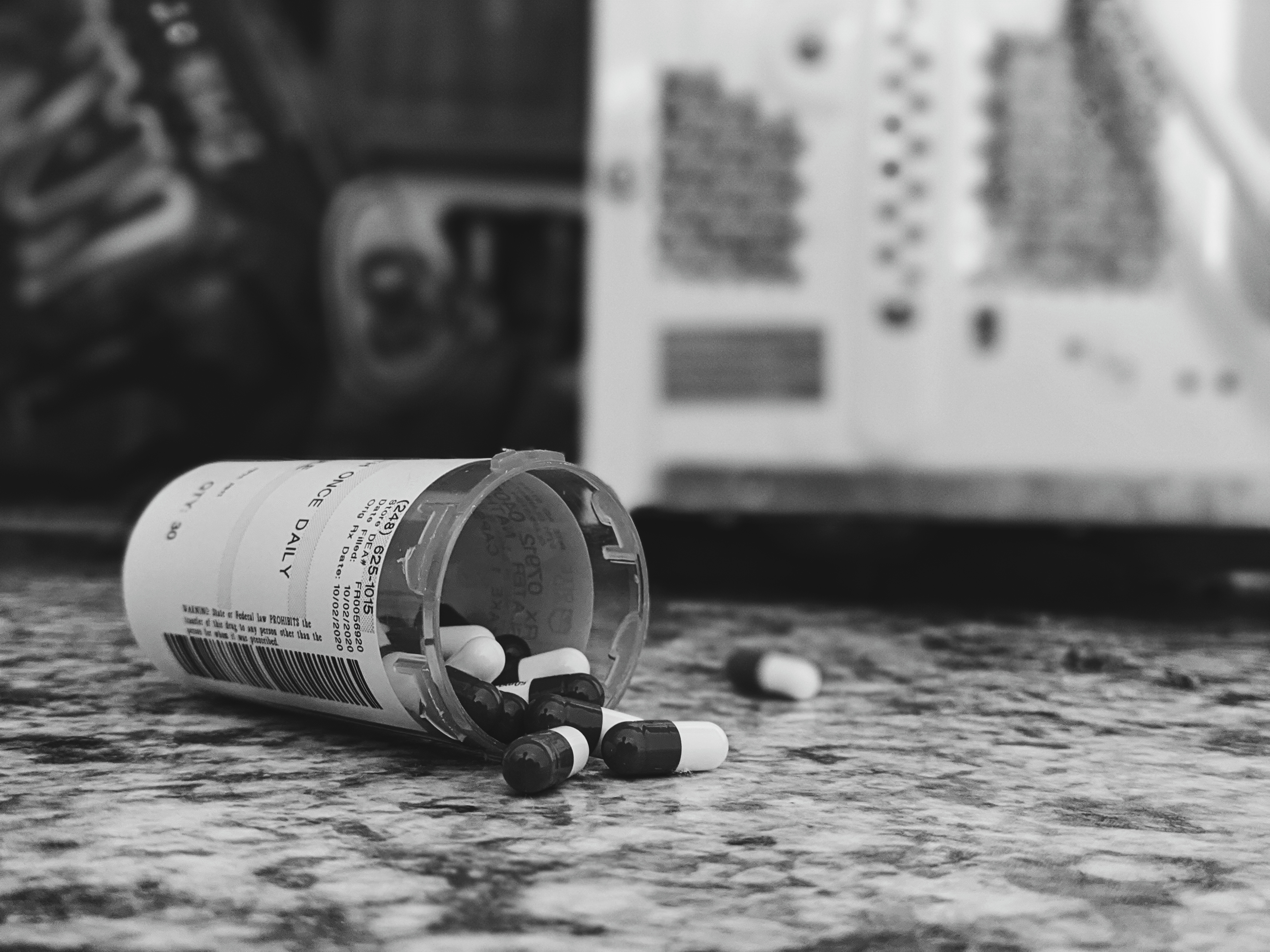
Nathan takes his medication to prepare to focus on a day of work and studying.

Asked about how he felt about taking medicine, Nathan said, “My relationship to my medicine is complicated. A lot of my happiness is based on being productive, which I need my medicine to do. But even when I’m focused I don’t get that feeling of motivation and drive to get things done. I don’t feel that at all. Sometimes feel like I’m really missing out on that.”

On days when there isn’t much to do, Nathan sometimes doesn’t take his medication. “Sometimes I try to do my classes when I haven’t taken my medicine. It literally feels impossible,” He said.

Dealing with academics, Nathan says there are always challenges. “I feel like I have to work much harder to succeed at school, for sure.”

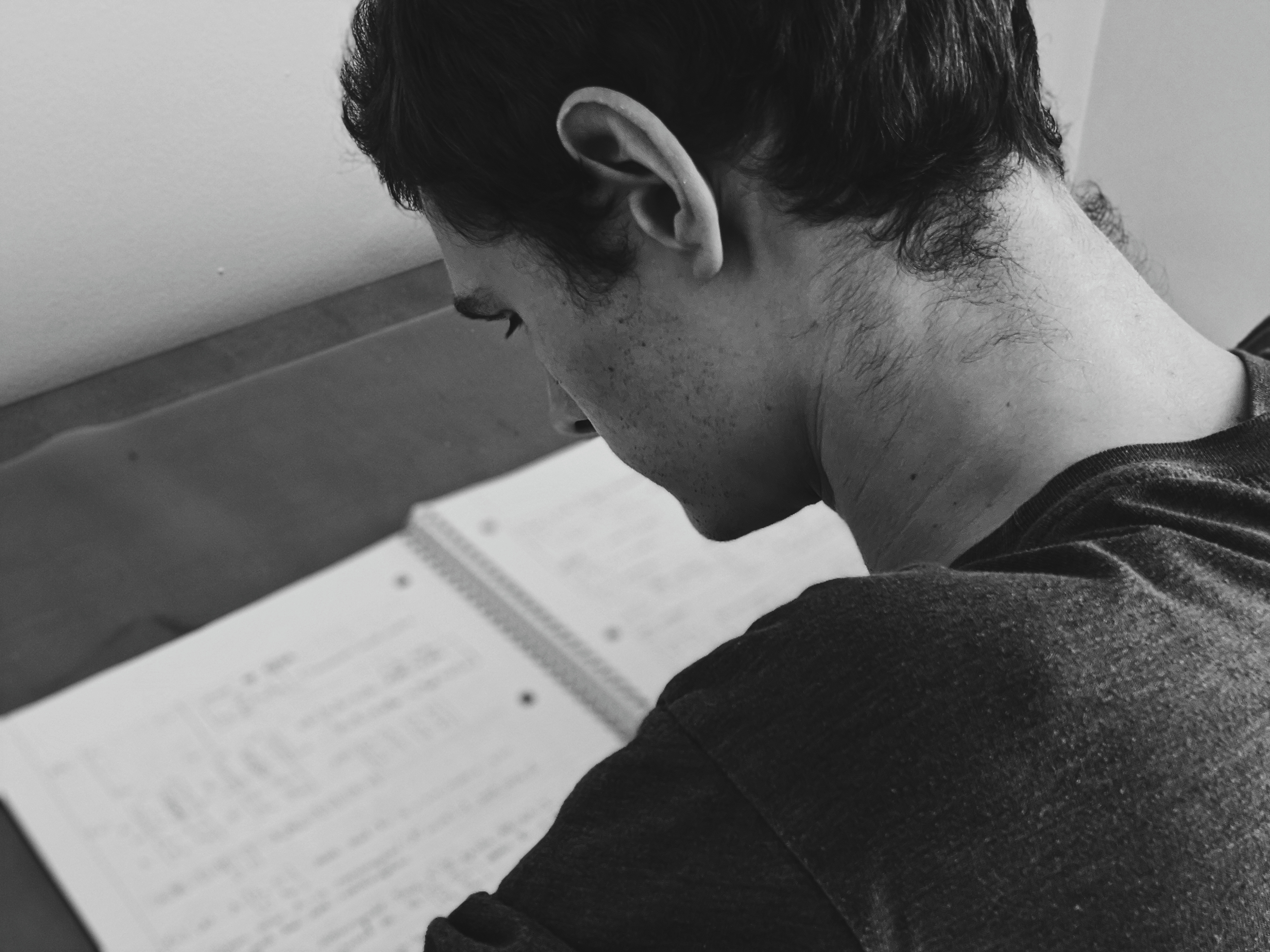
Nathan studying for an upcoming exam. As a TA, research assistant, and full time student, his schedule is often packed.

“I’m comfortable with who I am,” Nathan said. “It’s not like I feel like every day is a chore or a struggle to get through. ADHD is a part of me and I embrace it, it’s not necessarily something ‘bad.'”

Lab 3 – My Health Story

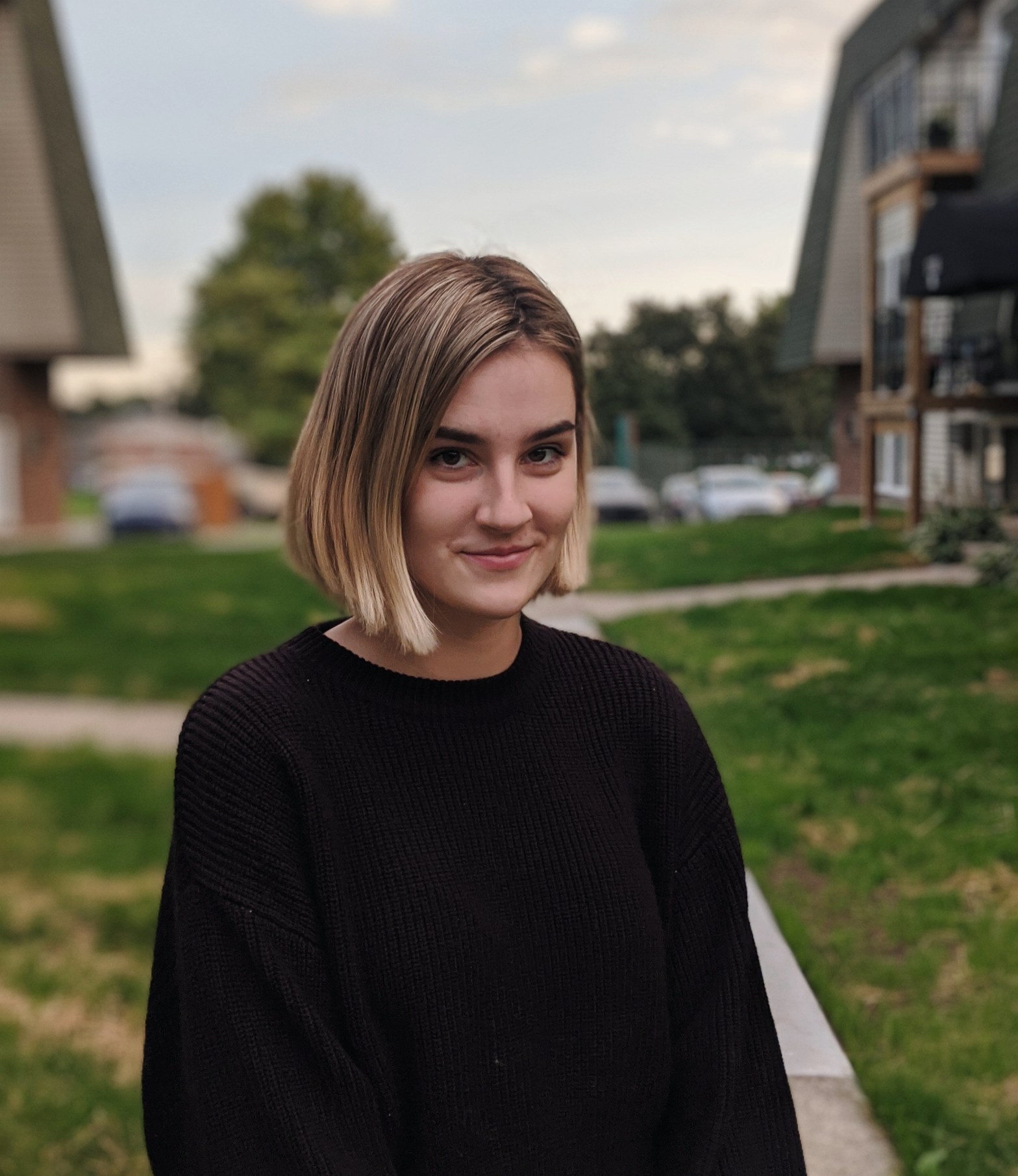
Photo: Me posing for a photo outside my apartment on a weekend after work. Photo taken by my boyfriend. Sep. 2020

I would be lying if I said self care came easily to me. I’ve never been the best at taking care of myself or knowing when to stop and take a deep breath to calm down.

I am a college student and a grocery store cashier – and that doesn’t really sound like a lot. Maybe it isn’t. But I have struggled with mental health my entire life, and I have a sinking suspicion that it contributes to my stress level when trying to balance everything I have going on.

To cope with being human, we are (allegedly) supposed to practice ‘self-care.’ From what I’ve gathered from videos, tv shows and social media, I’m very bad at it.

A piece of artwork painted in my sketchbook after moving into my apartment. The piece is based on a tutorial by Bob Ross. Sep. 2020

I struggle to work up the motivation to exercise or eat healthier foods, but among all the self-care failure there are a few successes. I love to draw and paint, so I try to carve out time for myself during the week to paint something now and then. Painting, drinking tea and lighting a candle or two is a guaranteed stress reliever.

My three-year-old succulent, enjoying the fading light from the apartment window. The plant has moved with me since I bought it in 2017.

Collecting plants has oddly been another very therapeutic activity for me. Taking time to water and care for plants (no matter how easy they are to keep alive) fills me with a tiny sense of pride. I’m proud of my older plants that have lasted a few years – it makes me feel like a good plant parent. It feels good to keep something alive and green.

Painting and taking care of plants is not much, but to me it’s special and it keeps me sane. Maybe not all my days are good days, but painting a little or looking after a tiny cactus does elevate some of those non-good days to at least decent. Not exactly youtube video-worthy self care, but it’s something – and I’m proud to stick to it.

Lab 1 – Responding to Health Stories

Photo Credit: Ryan Millier

When I hear ‘health stories’ in reference to journalism, I first think of articles talking about yoga, benefits of various ‘superfoods’ and, of course, articles documenting the work being done to create a vaccine for COVID-19. The Center For Health Journalism does show you a bit of that – but what it shares more of surprised me.

The Center for Health Journalism, or CHJ for short, showcases journalistic stories about public health. To me, public health always seemed to have a pretty direct definition – that being the health of the public and things we can do to improve it. After reading a few of CHJ’s articles, however, I realized that ‘public health’ is really a much bigger umbrella term for a lot of things we may not even immediately think of.

The first thing I read was an article about how the current wildfires on the west coast are impacting the homeless communities in the Bay Area. It immediately struck me that the subject of the article was something I had never even considered. The wildfires that started recently in Oregon have garnered national coverage for turning the skies red and orange as well as creating some of the worst air pollution in the entire world. We hear and read plenty about how people are evacuating due to this – but what about the people that have nowhere to go? This article was about them.

People with no supplies or shelter to deal with the smoke and smog from the fires are being exposed to it at all times. That is a health crisis – yet one I never would have thought of or spotted on mainstream news. The aftermath of a respiratory pandemic and prolonged exposure to some of the worst air quality on Earth for these homeless communities is an alarming and grim thought.

This issue is a true public health crisis worthy of coverage and relief efforts. The fact that I have neither seen nor read anything else about it on any other news platform is truly disheartening. That said, it has given me a new appreciation and understanding of what health journalism is and why we so desperately need it.

Public health involves the wellbeing of all people from all walks of life, and as journalists – particularly journalists with an interest in health – it is our duty to share important stories like these and shed light on issues the public may not be aware of.

Diversity Story – Identity

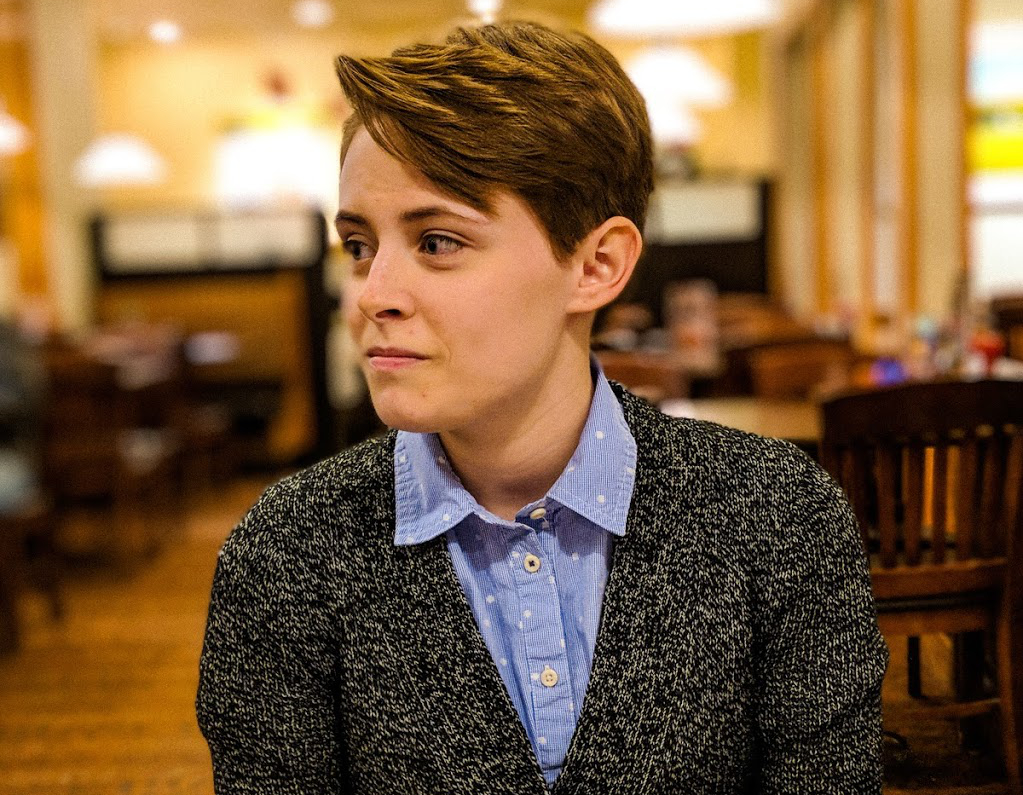
Image Source: Myself – taken 2017.

Growing up transgender in the U.S., especially in a small town, brings along with it a whole host of struggles – and Levi Gatza knows this better than most.

Born in a mid-Michigan village called New Lothrop, which has a population of around 560 total, Levi struggled with identity in his small community for much of his youth.

“The town I grew up in was very conservative, working class, and white,” Gatza said. “I was sheltered to the point that I didn’t even know LGBT people existed until I got internet access in high school.”

When he was young, Gatza says he always felt different but didn’t know in what way until he gained access to the internet in his teens. “Online, I started to find people on platforms like YouTube that would talk about their experiences and feelings about being trans that I could relate to. I couldn’t really find anything like that in my school social group.”

Gatza didn’t share his identity with peers or family during his high school years. Out of a very real fear of what could happen in his small, conservative community, he wasn’t able to publicly ‘come out’ until 2019. Many in the LGBT community face this sense of danger, especially in rural communities that may be less accepting. Transgender individuals face especially cruel fear, hatred, and mistrust – also known as transphobia. Explained by Planned Parenthood on their website:

Transphobia can create both subtle and overt forms of discrimination. For example, people who are transgender (or even just thought to be transgender) may be denied jobs, housing, or health care, just because they’re transgender.

In a rural, almost completely white and predominantly Catholic community, Levi says transphobia was common – as were other similar ‘viewpoints.’ “If anyone stood out from the norm, word would spread easily to paint that person as weird or creepy, whether it was accurate or not. Everyone in town knew each other so rumors were common, and everyone knew everything about everyone else.” Gatza explained.

Gatza said going away to college at Grand Valley State University in 2017 helped him tremendously in working through his identity and who he was outside of the oppressively small community of New Lothrop.

“As cliché as it is, I think going to college was a big change for me that let me start over and get away from the constraints of my small town,” Gatza said. “My college sadly isn’t that much of a step up from how homogenous New Lothrop is, but it has clubs for people who are LGBT. I also, for the first time in my life, had a professor who was also a trans man.”

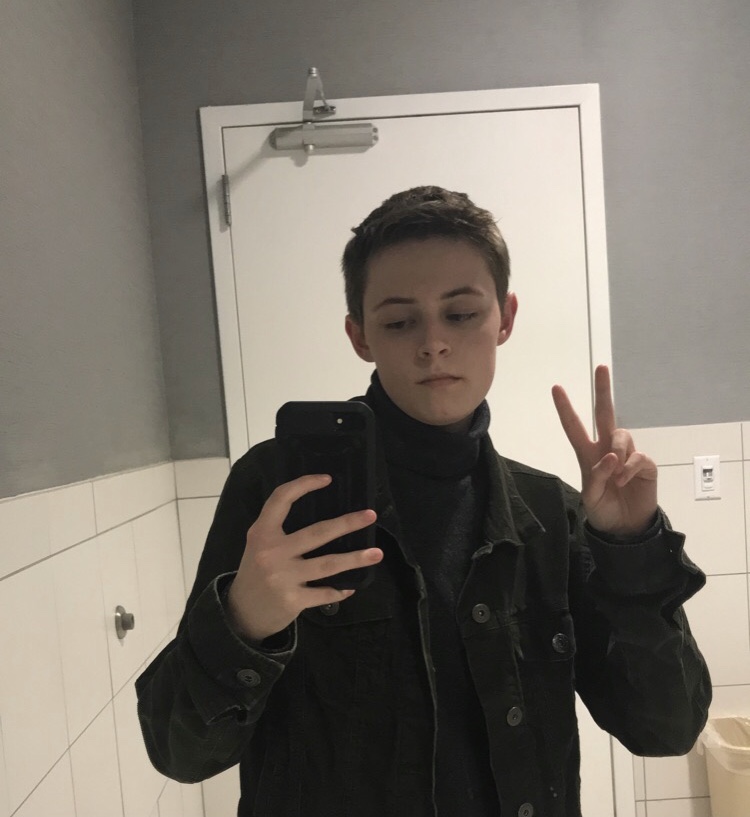
Photo Courtesy of Levi, 2020.

Even among people in the LGBT community, though, Gatza says there are misunderstandings and differences. No matter where he goes, he has found the transgender community remains incredibly misunderstood and largely underrepresented. While there is more trans visibility in the United States than ever, there is still a huge issue of widespread transphobia.

Transphobia rears its ugly head in almost every aspect of life for many. Gatza said he was especially worried about eventually getting a job, as there is an enormous amount of discrimination in the workplace.

“I’m afraid I might not be hired somewhere because of my identity,” Gatza said. The process of applying, too, is made more difficult by laws in Michigan and across the country.

“Having my name legally changed would be helpful too, but it’s a really tough process. You also can’t get your legal gender changed in Michigan unless you go through specific surgeries that literally cost hundreds of thousands of dollars – and they’re usually seen as ‘cosmetic,’ so they’re not even covered by insurance.”

Gatza says the process of coming to love and identify with who he is has been a long process, in part due to the community he grew up in and the challenges ahead of him. Most of all, he says, he wants to see less transphobia and more understanding.

“I guess I want others to understand that I don’t really want special treatment or to have focus on me… I can feel how uncomfortable people are when they interact with me. People shouldn’t walk on eggshells or be scared to ask things like pronouns,” Gatza said.

“I would love nothing more than to just be another regular guy.”

Under Our Skin – Reflection 9

Photo Credit: Úrsula Madariaga

“We hold these truths to be self-evident, that all men are created equal… you know, when they said ‘all men,’ they weren’t talking about all men.”

Jerrell Davis, a participant in the Seattle Times’ ‘Under Our Skin’ project, acknowledges a very uncomfortable truth. Institutionalized racism is real, heavily prevalent and extremely damaging – yet conversations about race remain scarce and little has been done to solve the problem.

‘Under Our Skin’ examines some of the intricacies of the problem with bringing up the conversation of race in the United States. It features the perspectives of a diverse cast of participants on a handful of terms, including ‘all lives matter,’ ‘white privilege’ and ‘microaggression.’

The term I was drawn to interact with first on the project website was ‘person of color.’ As a student journalist, I have always wondered about this term. I see it frequently used in news pieces from many sources and have used it myself in the past – but recently I have heard backlash against it, so I wanted to see what was said.

The words of the project’s participants both surprised and changed my mind about this term. In the past, I – among, I suspect, a lot of other white journalists and people alike – saw the term as inclusive and a ‘safe’ word to use. As a white journalist, I am hesitant to use terms like ‘African-American’ or even just ‘black’ to describe someone because I don’t know their experience – I’m white.

It feels wrong to try to ‘categorize’ someone, especially when you are writing from a place of privilege like I am. That was why I felt okay using ‘person of color’ in the past – I thought it was inclusive and I had seen it used in an ’empowering’ way by users on Twitter and Tumblr.

‘Under Our Skin’ changed my mind. As the participants explained that the term essentially boxes in all races except white together, I realized how damaging that term actually could be. Why is white considered a default? Boxing every single race on the planet besides white into ‘people of color’ assigns the term sort of a ‘lesser than’ meaning, and I really don’t like that. People in the video mentioned that it simplifies complicated issues into just mass ‘racism,’ and I realized this is true. I decided I don’t want to use this term anymore.

The other terms invoked similar feelings of surprise and a desire to have more conversation about these issues. The discussions of ‘all lives matter’ were particularly interesting to me.

I was already skeptical of those who use ‘all lives matter’ as a response to ‘black lives matter;’ it is a dismissive way of denying cries for help and refusing to talk about racism. The discussion of the phrase in ‘Under Our Skin’ demonstrated the truth of this – and gave me more insight into why it is such a damaging response.

“I can’t believe that anyone who responds to ‘black lives matter’ with ‘all lives matter’ believes that all lives matter. If you truly believed that all lives matter, you’d be protesting with us,” said Jerrell Davis.

That sentence made me realize how important this project is, as well as other movements that acknowledge the difficulty we have talking about race in the United States. There is a fundamental misunderstanding and desire to avoid addressing racial inequality here.

The first step to overcoming this hurdle is learning – and more importantly, listening to voices different than our own.

Constructing the Terrorist Threat – Reflection 8

Photo Credit: Janko Ferlic

With all the ‘terrorism’ shown on the news, you’d think people in the U.S. would have an idea of what they were truly going to war against – but that is far from the truth.

The documentary Constructing the Terrorist Threat delves into this phenomenon. It explores the Trump administration’s 2016 ban on Muslims and the racism and xenophobia that the government – and media – have used to spin countries and religions different from our own into ‘terrorists.’

Terrorism, as we know it, is wildly misunderstood. In the United States, ‘terrorist’ has an instant association with being a person of color – likely ‘Middle Eastern.’ ‘Muslim’ is a dirty word to the white, privileged class of the United States; this word evokes a feeling that whoever it is referring to is the enemy. Despite this, most real terrorism in the U.S. is committed by white males. So how did this racist and blatantly wrong association come into being?

The short answer is, the government. In order to justify constant violent and political intervention in other countries, the United States has carefully constructed the idea of followers of Islam being ‘radicalized others.’ By using a few events to create mass fear and hysteria – 9/11 is a good example – the United States has (unfortunately) successfully crafted a public image of Muslims being militant, radical terrorists.

The government and news media have taught media consumers to fear Muslims ‘out of all proportion to reality,’ as the documentary’s Deepa Kumar says. If U.S. residents do not see Muslim people as humans just like them, then they can easily justify the terrible atrocities the government continues to commit. This is the way the government makes bombing civilians or installing dictators ‘okay;’ their actions are seemingly against violent, U.S.-hating terrorists that want to kill you, not just regular old people trying to go to work and feed their families like you and I.

Muslims are dehumanized and demonized. Their image, as the documentary states, is purposefully twisted to give us a certain perception of them as an entire group. When as a whole their religion is displayed to us as being ‘violent’ or even ‘evil,’ every member is lumped together as if they are not individuals. Not only are Muslim people dehumanized and seen as one giant ‘threat’ to U.S. society – they are also demonized and made to seem truly ‘evil’ with a desire to kill innocent U.S. citizens because they ‘hate America.’

The fact that the U.S. has been toying with countries in the Middle East and surrounding areas for decades, installing regimes and creating problems, is not something the government wants people to bat an eyelash at. If there is a big vague ‘enemy’ that the American people can fear and not understand, then anything is justified and right.

“Our imaginations have been constrained by a system that creates moral panics and focuses our attention on racialized threats” is a particularly thought provoking statement in the documentary on this subject.

The media reports on the news – and any conflict that the U.S. military or government is involved in is news. When the ‘news’ is continuously a person of color that kills white people, it creates a ‘threat’ that people can identify when they turn on the TV or read the newspaper – and it doesn’t matter if people of color actually commit far less terrorist acts than white people. If it is all people see on TV, it is all they know.

This whole idea of terrorism, obviously, is ridiculously wrong, unfair, and racist. It causes needless death, suffering, exploitation, and xenophobia that should never have happened. ‘Muslims’ are not a cult of extremists hell-bent on destroying the United States, just like ‘Christians’ are not a cult of white supremacists dedicated to eradicating people different than them. We are all individuals and no one should have to speak for an entire group just because they look like them or happen to practice the same religion.

I think this image will be ridiculously difficult to alter, given the amount of time the United States has been molding this image of the ‘foreign extremist.’ In order to end the xenophobic treatment of Muslims and dehumanization of individuals, we must see others who are not like us as our equals. This is a monumental task.

The media is what we see, so the media is what we know. I believe the only way to end this idea of the constant ‘terrorist threat’ is to do real, hard-hitting, truly accurate journalism. Years of delving into the real motives of the U.S. government’s militaristic agenda and portrayal of people that aren’t just white men could be a good start.

Until we can turn on the TV or watch the news and see people who don’t look like us or share our religion not being treated as ‘others,’ this problem will persist. Telling the real truth and giving a voice to those branded as ‘others’ is the only way we can begin to turn the tide.

Design a site like this with WordPress.com
Get started