
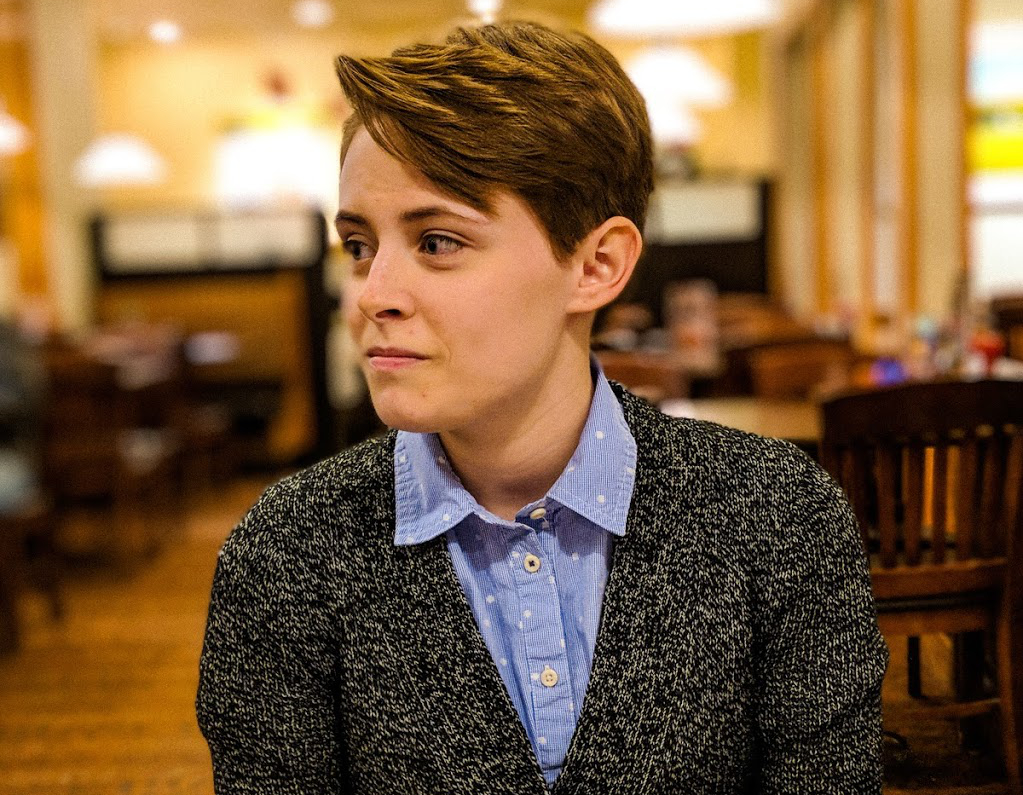
Image Source: Myself – taken 2017.
Growing up transgender in the U.S., especially in a small town, brings along with it a whole host of struggles – and Levi Gatza knows this better than most.
Born in a mid-Michigan village called New Lothrop, which has a population of around 560 total, Levi struggled with identity in his small community for much of his youth.
“The town I grew up in was very conservative, working class, and white,” Gatza said. “I was sheltered to the point that I didn’t even know LGBT people existed until I got internet access in high school.”
When he was young, Gatza says he always felt different but didn’t know in what way until he gained access to the internet in his teens. “Online, I started to find people on platforms like YouTube that would talk about their experiences and feelings about being trans that I could relate to. I couldn’t really find anything like that in my school social group.”
Gatza didn’t share his identity with peers or family during his high school years. Out of a very real fear of what could happen in his small, conservative community, he wasn’t able to publicly ‘come out’ until 2019. Many in the LGBT community face this sense of danger, especially in rural communities that may be less accepting. Transgender individuals face especially cruel fear, hatred, and mistrust – also known as transphobia. Explained by Planned Parenthood on their website:
“Transphobia can create both subtle and overt forms of discrimination. For example, people who are transgender (or even just thought to be transgender) may be denied jobs, housing, or health care, just because they’re transgender.“
In a rural, almost completely white and predominantly Catholic community, Levi says transphobia was common – as were other similar ‘viewpoints.’ “If anyone stood out from the norm, word would spread easily to paint that person as weird or creepy, whether it was accurate or not. Everyone in town knew each other so rumors were common, and everyone knew everything about everyone else.” Gatza explained.
Gatza said going away to college at Grand Valley State University in 2017 helped him tremendously in working through his identity and who he was outside of the oppressively small community of New Lothrop.
“As cliché as it is, I think going to college was a big change for me that let me start over and get away from the constraints of my small town,” Gatza said. “My college sadly isn’t that much of a step up from how homogenous New Lothrop is, but it has clubs for people who are LGBT. I also, for the first time in my life, had a professor who was also a trans man.”
Even among people in the LGBT community, though, Gatza says there are misunderstandings and differences. No matter where he goes, he has found the transgender community remains incredibly misunderstood and largely underrepresented. While there is more trans visibility in the United States than ever, there is still a huge issue of widespread transphobia.
Transphobia rears its ugly head in almost every aspect of life for many. Gatza said he was especially worried about eventually getting a job, as there is an enormous amount of discrimination in the workplace.
“I’m afraid I might not be hired somewhere because of my identity,” Gatza said. The process of applying, too, is made more difficult by laws in Michigan and across the country.
“Having my name legally changed would be helpful too, but it’s a really tough process. You also can’t get your legal gender changed in Michigan unless you go through specific surgeries that literally cost hundreds of thousands of dollars – and they’re usually seen as ‘cosmetic,’ so they’re not even covered by insurance.”
Gatza says the process of coming to love and identify with who he is has been a long process, in part due to the community he grew up in and the challenges ahead of him. Most of all, he says, he wants to see less transphobia and more understanding.
“I guess I want others to understand that I don’t really want special treatment or to have focus on me… I can feel how uncomfortable people are when they interact with me. People shouldn’t walk on eggshells or be scared to ask things like pronouns,” Gatza said.
“I would love nothing more than to just be another regular guy.”
 Sidney Richardson: Blog