

Photo Credit: Sergio Omassi
Imagine this: you’ve lost your job, your home, your savings. You’re down to your last $1000. You have no college degree – and you’re supporting a young child. Where do you go from here?
This is what Spent asks its site visitors to think about. “PlaySpent” is a game created to help people understand the real weight of poverty and the challenges that some people face every day.
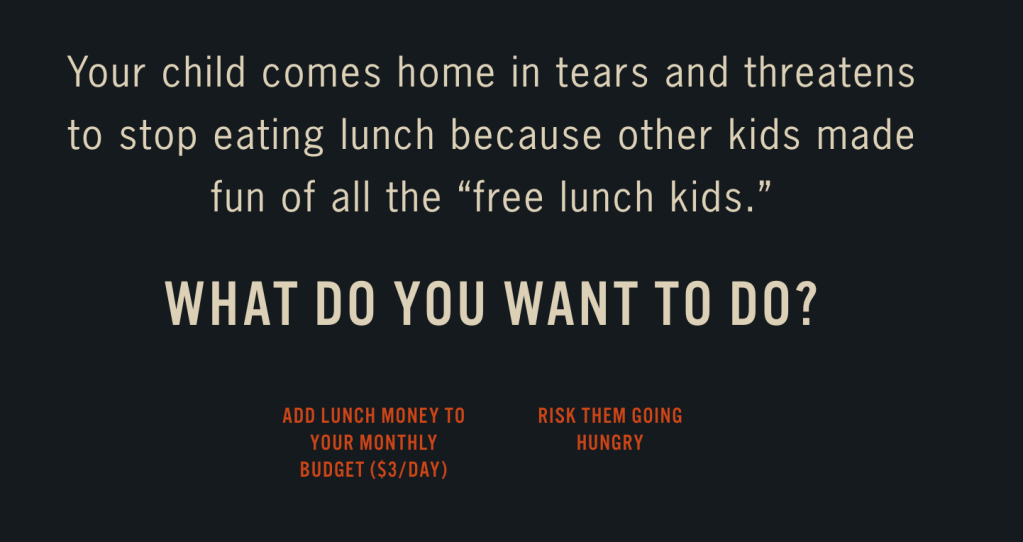
The ‘game’ asks you to make a variety of choices – what low-paying job to apply for, where to live, what insurance to pay for. The most startling choices, however, are like the one above, which asks what the player would do in the face of their child being bullied – pay an extra expense, or allow their child to be tormented and potentially starve?
Spent exposes some heartbreaking truths about poverty. The impossible choices that Spent asks players to make are real events in the lives of many in the United States, unfortunately. According to NPR, about 1 in 8 people live below the poverty line in the U.S., and this game is their reality.
The situation players of Spent find themselves in is one they likely imagine they will never find themselves in. Losing everything with no way to move forward is a bleak and harsh reality which unfortunately is not fiction.
A statement I’ve often heard about the impoverished and unemployed is “why don’t they just get a job?”
There seems to be an assumption in much of U.S. society that people that are poor are suffering because of their own ‘bad choices.’ The reality, in most cases, is actually that poverty is a cycle from which most have no opportunity to escape.
Many in poverty grow up in already poor and difficult homes and have no access to education that would give them a ticket out. Discrimination and minuscule job opportunities mean that most people under the poverty line will stay there.
Michael B. Sauter’s Faces of Poverty gives a glimpse into the real appearances of the lives we emulate in PlaySpent. Minorities, women, children and people with disabilities populate the eleven point list.
On top of limited resources and money, these people also face discrimination for their gender, race and physical or mental ability. With hurdles like that to overcome, how can you even begin to jump?
 Sidney Richardson: Blog